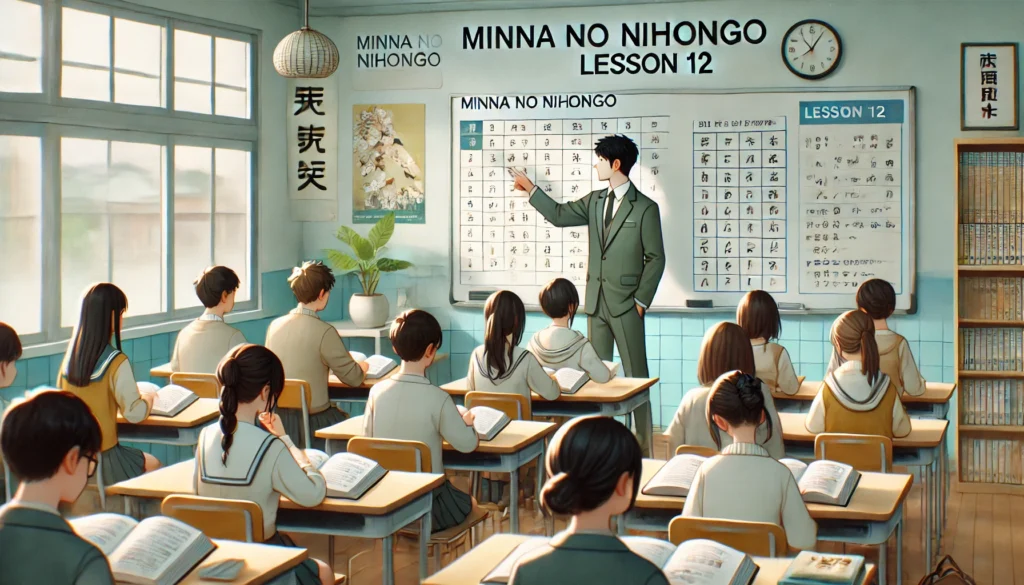
Minna no Nihongo Lesson 12 vocabulary takes learners further into everyday Japanese conversations. The vocabulary in this chapter centers around describing the weather, discussing feelings, and talking about schedules.
These words are not just textbook examples—they are practical terms you’ll hear often in Japanese life. This vocabulary sets the stage for conversations that build connections, helping learners express themselves more naturally.
Read More: Minna no Nihongo Lesson 11 Vocabulary
Minna no Nihongo Lesson 12 Vocabulary Practice:
| Romaji | Hiragana | English |
|---|---|---|
| kantan | かんたん | easy, simple |
| chikai | ちかい | near |
| tooi | とおい | far |
| hayai | はやい | fast,early |
| osoi | おそい | slow,late |
| ooi | おおい [ひと が-] | many [people], much |
| sukunai | すくない [ひと が-] | few [people], a little |
| atatakai | あたたかい | warm |
| suzushii | すずしい | cool |
| amai | あまい | sweet |
| karai | からい | hot (taste),spicy |
| omoi | おもい | heavy |
| karui | かるい | light |
| ii | いい [コ-ヒ- が-] | prefer (coffee) |
| kisetsu | きせつ | season |
| haru | はる | spring |
| natsu | なつ | summer |
| aki | あき | autumn, fall |
| fuyu | ふゆ | winter |
| tenki | てんき | weather |
| ame | あめ | rain,rainy |
| yuki | ゆき | snow,snowy |
| kumori | くもり | cloudy |
| kuukou | くうこう | airport |
| umi | うみ | sea, ocean |
| sekai | せかい | world |
| matsuri | [お]まつり を します | party festival |
| butaniku | ぶたにく | pork |
| toriniku | とりにく | chicken |
| gyuuniku | ぎゅうにく | beef |
| remon | レモン | lemon |
| ikebana | いけばな を します | flower arrangement |
| momiji | もみじ | maple, red leaves of autumn |
| dochira | どちら | which one(of two things) |
| dochiramo | どちらも | both |
| ichiban | いちばん | the most |
| zutto | ずっと | by far |
| hajimete | はじめて | for the first time |
Common Themes in Lesson 12 Vocabulary
The vocabulary in Lesson 12 can be divided into three main themes: weather, emotions, and time expressions. By mastering these categories, you’ll be equipped to navigate casual and formal discussions alike.
Weather Vocabulary
eather is a topic that frequently pops up in Japanese conversations, especially as a way to start small talk. Lesson 12 introduces several weather-related terms, such as:
- 天気 (てんき, tenki) – Weather
- 晴れ (はれ, hare) – Clear weather/sunny
- 雨 (あめ, ame) – Rain
- 雪 (ゆき, yuki) – Snow
- 暑い (あつい, atsui) – Hot
- 寒い (さむい, samui) – Cold
Example Sentences
- 今日の天気はどうですか?(きょうのてんきはどうですか?) How is today’s weather?
- 冬はとても寒いです。(ふゆはとてもさむいです。) Winter is very cold.
- 夏に日本は暑いです。(なつににほんはあついです。) Japan is hot in the summer.
Weather-related vocabulary is essential for small talk in Japan, where discussing the day’s climate is a cultural norm.
Expressions of Feelings and States
Lesson 12 also dives into expressing emotions and physical states. Understanding these words helps you communicate your feelings effectively.
Key Words
- 元気 (げんき, genki) – Energetic/well
- 疲れる (つかれる, tsukareru) – To get tired
- 気持ち (きもち, kimochi) – Feeling/mood
- うれしい (ureshii) – Happy
- 悲しい (かなしい, kanashii) – Sad
- 痛い (いたい, itai) – Painful
Example Sentences
- 私は元気です。(わたしはげんきです。) – I am well.
- 頭が痛いです。(あたまがいたいです。) – I have a headache.
- 楽しい時間でした。(たのしいじかんでした。) – It was a fun time.
Learning these words not only improves your vocabulary but also makes your conversations more heartfelt and relatable.
Time and Frequency Vocabulary
Time expressions allow you to discuss when things happen and how often they occur.
Key Words
- 今週 (こんしゅう, konshuu) – This week
- 来月 (らいげつ, raigetsu) – Next month
- 毎日 (まいにち, mainichi) – Every day
- 時々 (ときどき, tokidoki) – Sometimes
- いつも (itsumo) – Always
Example Sentences
- 今週末、何をしますか?(こんしゅうまつ、なにをしますか?) What will you do this weekend?
- 毎日日本語を勉強しています。(まいにちにほんごをべんきょうしています。) I study Japanese every day.
- 時々映画を見ます。(ときどきえいがをみます。) – I watch movies sometimes.
Understanding these terms lets you discuss your routine and future plans, making your Japanese more dynamic and versatile.
Verbs Introduced in Lesson 12
Key verbs in this lesson include actions that relate to daily activities and feelings. Examples are:
- 降る (ふる, furu) – To fall (used for rain or snow)
- 始める (はじめる, hajimeru) – To start
- 終わる (おわる, owaru) – To finish
Conjugation Practice
- 降ります (ふります, furimasu) – It rains/snows (polite form)
- 降っている (ふっている, futteiru) – It’s raining/snowing (present continuous)
- 降らない (ふらない, furanai) – It doesn’t rain/snow (negative form)
Using these verbs effectively makes your sentences more precise and conversational.
How to Practice Lesson 12 Vocabulary
To truly master this vocabulary, consistent practice is key. Here are some strategies:
- Flashcards: Use apps like Anki or physical cards to review daily.
- Writing Practice: Create sentences for each word.
- Listening: Watch Japanese weather forecasts or slice-of-life dramas.
These methods will help reinforce your memory and build confidence.
Conclusion
Minna no Nihongo Lesson 12 provides a treasure trove of vocabulary that enhances your ability to discuss weather, emotions, and schedules in Japanese. By focusing on these practical themes, you’ll find yourself better equipped to handle real-life conversations.
FAQs
How do I remember Japanese weather terms?
Use visual aids and pair the words with images of weather conditions for better recall.
Why are time expressions important in Japanese?
They allow you to plan, discuss routines, and participate in conversations more fluidly.
Can I use these words in formal conversations?
Yes, most of the vocabulary can be used in both casual and polite settings, depending on the grammar structure.
How can I expand on the vocabulary in Lesson 12?
Look for related words in dictionaries or online, and practice using them in different contexts.